

The Great War — Season 4
108 Episodes · Premiered January 2, 2017 · Ended December 28, 2017
Episodes
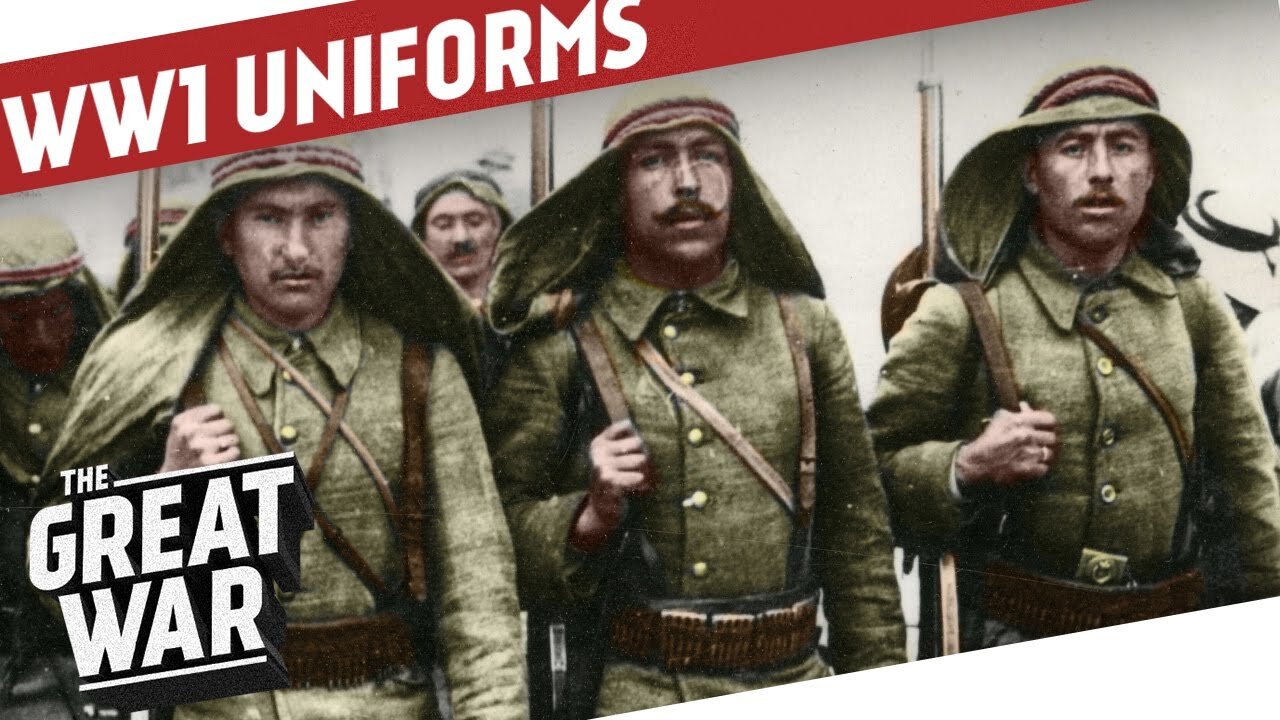
The Ottoman Army underwent considerable reforms after the losses on the Balkans. And under German influence, the military tried to bring the whole army up to the standards of modern war. In a lot of way, the results were decent or even good but supply problems led to a great variety in uniform quality across the 400 year old Empire.

The Kingdom of Hungary was an integral part of the Austro-Hungarian Empire. Hungarian soldiers fought on almost all fronts of World War 1. The Battle of Limanowa was one of their most remembered victories where Hungarian troops fought of the Russian army. But the end of World War 1 was not in 1918 and but in 1920 with the treaty of Treaty of Trianon.

Snipers in World War I on the Western Front were used for psychological warfare in quieter times and during offensive to destroy key enemy positions like machine gun emplacements. While the French and the German Army started with rules and regulations for these troops, the British Army quickly had to adapt.

During World War 1, German submarines were a major thread to shipping routes of the Entente everywhere. The Royal Navy and and her allies had to come up with defence mechanisms against the silent hunters. They deployed flying boats and airships to spot the enemy U-Boats, harassed them with depths charges and mines. But the most effective measure against them proved to be the convoy.

1916, the Year of Battles, had strained Germany's resources everywhere but especially on the Western Front they needed to defend their captured territory against an ever growing number of Entente Forces. Erich Ludendorff decided to shorten the front line where possible and built a new "Defence In Depth" line: The Siegfried Line. This defensive network was supposed to grind the Entente forces down while freeing up more German resources.

Plastic and reconstructive surgery saw rapid development during World War 1. Modern medical care and better equipment increased the chances of survival for the soldiers. But these survivors were often disfigured or lost limbs as a result. To help them return to a somewhat normal life, reconstructive surgeons developed methods to restore their faces and aided them with prosthetics.

Some sources say that during the four years of World War 1, medicine and medical treatments advances more than during any other four year period in human history. The chances for a soldier to survive his injury were far greater in 1918 than in 1914.
The classic narrative of the outbreak of World War 1 is that everyone saw it coming and was awaiting it with patriotic fervor. But studying the people that profited most from a war, the bankers, that idea is definitely challenged.
Russia's history in the decades leading up to World War 1 where a time of great turmoil and social changes. The Romanov tsars held a tight grip on the country which remained an autocracy even though the people requested change. And by 1917, three years into World War 1, the people demanded change again.
The Cossacks are surrounded by myths and legends. For some they were the "Tsar's dogs" for others they were more comparable to the cowboys of the Wild West. In any case, their history and culture is unique and is deeply intertwined with the rise and end of the Romanov dynasty. And that's why we are taking a look further back than usual to introduce to the Cossacks.

India was part of the British Empire during World War 1 and it was of vital importance to the war effort. Resources, manufacturing power and over 1,3 million men that served in the Army meant a great price for India to pay during the war. But even before the conflict, the call for independence grew louder and louder.
Without trains, the modern armies of World War 1 were not able to move their troops en masse. Without trains, the soldiers at the front didn't have food or ammunition and without trains, the soldiers wouldn't make it to the nearest hospital. Trains were the backbone of the new, industrialised war of the 20th century.
Portugal's participation in the First World War 1, especially the service of the Portuguese Expeditionary Corps on the Western Front, is often forgotten. And even when the troops were still fighting, the political situation back home had changed so much that the soldiers were largely forgotten.
The Island of Guam was on the other end of the world when the US declared war on Germany in 1917. However, they had been involved in the global conflict for years already. When the Germans lost their colonies in the Pacific, the German merchant raider SMS Cormoran II had no other choice but to seek refuge in the then neutral Arpor Harbour, Guam. For months the German crew around Adalbert Zuckschwerdt stayed on the island and became a kind of sensation. But that all changed on April 6, 1917.
The professional British soldier of 1914 had little to do with the British conscript of 1918. So, even though World War 1 is often perceived as something static, the British infantry underwent a considerable evolution during the war.
World War 1 was a war of artillery, 75% of casualties are attributed to artillery fire. And since the late 19th century the development of field canons, howitzers and mortars had made rapid progress. We are taking a look at the standard artillery pieces of the German, French and British Army at the outbreak of the war in this first part of a new series.

"Bloody April" was the result of two competing aviation strategies: The more defence oriented German Luftstreitkräfte and the more offensive oriented British Royal Flying Corps. The RFC needed air reconnaissance for the Battle of Arras and the Germans needed to deny them them. With the superior German Albatross D.III fighters, the German Jagdstaffeln inflicted heavy losses on the RFC.
Japan's participation in World War 1 is an often overlooked part of their history - even in Japan itself. Their service as one of the members of the Entente marked the climax of a development that started with the Meiji Restoration, a way out of isolation and into the global alliance system. This brought Japan more power and was also very lucrative. And after fighting in the Pacific Theatre of World War 1, the Siege of Tsingtao and contributing the Japanese Navy to the war effort, Japan had a seat at the table of the Versailles peace negotiations.
Croatia was part of the Austro-Hungarian Empire during World War 1 and Croats were just one of the many ethnicities within the Habsburg Empire that went to to war in 1914. Croats served in Galicia, on the Isonzo Front or in the Navy and it was a Croat who built up the Austro-Hungarian Air Force. Still towards the end of the war, more and more Croats thought about independence.
Austria-Hungary fielded probably the most diverse army of World War 1, the troops also had a proud tradition going back decades that influenced their uniform design as much as local customs. During the course of the war, the Habsburg Empire also suffered from a lack of supplies and still needed to modernise their equipment.
Othais explains the rifles and pistols that Greece fielded in the First World War, among them the legendary Mannlicher–Schönauer M1903 and the Greek Gras M1874.
Spain was one of the neutral nations of World War 1. A deep social divide and a decline from world power meant that they stayed out of the global conflict. Still, the war affected Spain in many ways. One of the consequences was the establishment of a huge arms industry that supported France and other fighting nations.
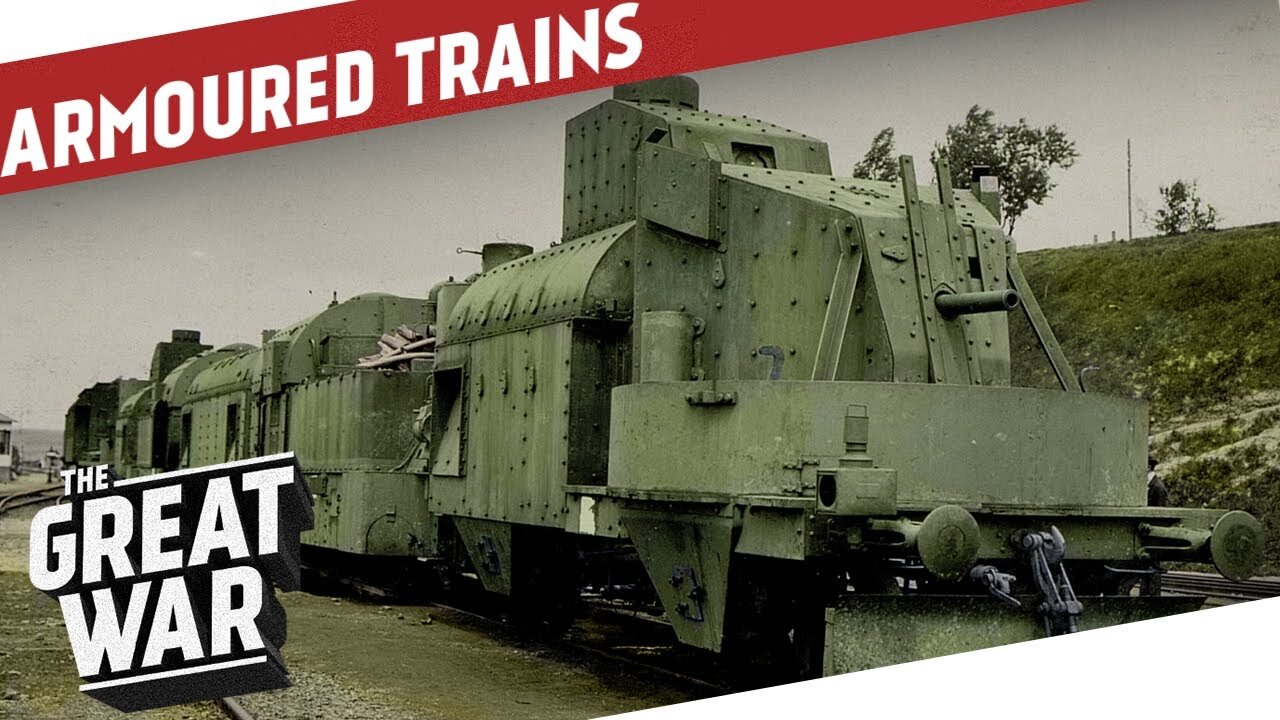
Armoured Trains were heavily armed and armored trains operating the vast rail networks of Europe, especially on the Eastern Front of World War 1. Their tactics and design evolved considerably during the First World War and the later Russian Civil War. From rather improvised locomotives to sophisticated designs specially built for combat purposes.
Czechs and Slovaks were minorities with the Austro-Hungarian and Russian Empire. Even before the outbreak of the war they demanded more rights as industrious citizens but were often overheard. During the war, they decided to take matter into their own hands and fight. And that they did in many armies across Europe.
Tunnel and mining warfare was an important part of World War 1, especially on the Western Front and to a lesser, but still deadly, degree on the Italian Front. The dangers for the tunnelers were immense. And the destruction they caused with explosions was too.
Othais introduces us to the famous British standard rifles of WW1 including the Short Magazine Lee Enfield (SMLE), the Long Enfield and the controversial Ross Rifle.
The millions of dead soldiers of World War 1 needed and often still need a proper burial place. But modern war, waged with artillery and poison gas, made even the retrieval, let alone the identification of bodies very difficult.
No synopsis available.
No synopsis available.
No synopsis available.
No synopsis available.
No synopsis available.
The mountains along the Italian front made for one of the most brutal and unforgiving battlefields of the World War 1, and the soldiers who fought here were tougher and more resilient than most. The Italian Alpini and the Austro-Hungarian Alpenjäger and Kaiserschützen who fought in the Dolomites waged different versions of mountain warfare, but both were subject to the harsh conditions of the peaks.
Though joining the war later than most, Brazil was the only South American nation to play an active role, albeit a brief one. After initially declaring neutrality in August 1914, a series of sunken ships and dead Brazilians on behalf of the Germans' submarines forced Brazil's hand, as anti-German sentiment in the country rose during the first three years of the war. With newly acquired ships, Brazil was ready to join the war as a naval power. Her involvement may not have lasted long, but it did earn Brazil a seat at the table during the Versailles peace conference.
The Hindenburg Line, which was developed in early 1917, was designed to have depth and flexibility. Pillboxes, bunkers and machine gun nests all played vital roles in the system, as did the counter-attacking Eingreiftruppen. Since its conception, it had been effective when used properly, but Passchendaele would be where the Siegfriedstellung would face its toughest test yet. Allied superiority in artillery and aircraft, unrelenting bad weather and exhausted soldiers all put a huge strain on the German defence system, but would they be its undoing?
With the development of planes shortly before the Great War, the concept of strategic bombing made its debut in this conflict. Each country had different doctrines with regards to strategic bombing, and in this video we'll be looking at British, French and German doctrines regarding the bombing of civilian targets and supply lines, as well as considering their effectiveness.
Zionism, the movement for the establishment of a Jewish homeland, got new momentum during World War 1. Zionists, like Chaim Weizmann rallied for support in their respective home countries, others wanted to actively advance the zionist idea by taking part in the war and fought with the Jewish Legions. The Balfour Declaration of 1917 was another step towards fulfilling the idea of a home for the Jewish people.
The Jagdkommandos were Austria-Hungary's special assault troops during WWI. From their pre-war origins, these troops had to adapt to modern war, and did so with some success. However, towards the end of the war their successes turned to failures and the Jagdkommandos faded into relative obscurity compared to their German and Italian counterparts.
One of the theatres of war that's often overlooked, the Pacific saw some of the earliest military actions of the Great War. On top of this, there were many naval engagements in this particular ocean, including some famous German merchant raiders. We cover all this and more in today's special episode.
The Grand Duchy of Finland was a largely autonomous part of the Russian Empire when the First World War broke out, but that would soon change. Rising nationalism in the country and chaos in Russia, among other things, helped Finland on its way to becoming an independent country.
The Caucasus region with its many different ethnic groups and its resources was always of particular interest to the greater powers like Russia, Persia or the Ottoman Empire. In the late 19th and early 20th century, the idea of ethnic self determination and resulting national movements, the fluctuating powers situation caused by World War 1 created a unique situation for Georgians, Azerbaijanis and Armenians.
The Dunsterforce was a small British military mission under Colonel Dunsterville. Its goal was to prevent the spread of German influence in the South Caucasus and Caspian Sea. The soldiers soon find themselves in the complicated and violent post-revolutionary Caucasus where no one can really be trusted.

With the end of the Battle of Verdun, the year 1916 ends. A battle that was described as "World War 1 in a microcosm" and has been remembered in infamy ever since. Late 1916 also brings political shake-ups, an end to the Romanian campaign and new action in the Middle East. And still no end in sight.
During our trip to France we visited the Meuse-Argonne American Cemetery and Monument in Romagne. The cemetery contains the largest number of American military dead in Europe and was already dedicated when the war was still raging in Europe.
We went to the Verdun area in France this winter and visited Fort Douaumont together with the developers of the video game VERDUN. They rebuilt the fort in their game and their knowledge of the sight shows when Indy is walking through the fort.
No synopsis available.
Generals of WW1 did a lot of stupid things, so many in fact that we made a second top 10 list to appeal to your inner armchair general.
No synopsis available.
No synopsis available.
No synopsis available.
No synopsis available.
No synopsis available.
No synopsis available.
The Battle of Cambrai 100 years ago was one of the pivotal moments for the British Tank Corps and tank combat in general. For the first time, the tanks were deployed in a way that they could play out their strengths.
No synopsis available.
Indy takes a look at the Sopwith Snipe and meets Trevor who shows us the typical gear of a WW1 pilot.

This war was supposed to be over by Christmas 1914. Now, as 1917 dawned, the world still knew 10 active theatres of war around the globe: Western Front, Italian Front, Eastern Front, Macedonian Front, Caucasus Front, Persian Front, Libyan Front, Palestine, Mesopotamia and German East Africa - and still there was no end in sight, no quick victory to be had for any side.

This week 100 years ago there was talk about peace between the great waring nations. But even after millions of casualties, starving people at home and more escalation on the horizon, the situation didn't seem bad enough for one of them to give in on their demands. At the same time, the fighting in Romania continues and the political situation in Russia becomes evermore dire.

The winter of 1916/1917 is the harshest one so far in the war. Nowhere do the soldiers suffer from these extreme conditions than on the Italian Front in the Dolomites. The fighting there is fierce already but the cold, avalanches and height make it even more brutal. After the failed peace negotiations, the cry for ethnic self determination can still be heard all around the world. And German foreign secretary Arthur Zimmermann sends a fateful telegram to Mexico that is today remembered as the Zimmermann-Telegram.

Germany is about to unleash unrestricted submarine warfare again which might draw the United States into the conflict - but the Germans are not worried. The German Kaiser is instigating with his sister in Greece and Nivelle has big plans for a decisive battle in spring.

This week 100 years ago, Germany goes all in and resumes unrestricted submarine warfare, their goal is to starve Britain out of the war before Germany cannot continue the war. All doubts are brushed aside and all shipping around the British Isles will be sunk without warning. At the same time, the economic situation in Russia gets worse and worse and winter prevents any major action.

While the US breaks of diplomatic relations with Germany in response to unrestricted submarine warfare, the Western Front is rather quiet. On the Macedonian Front, the Bulgarian Army is digging in at Doiran. They built a formidable defence network without the Entente realising it and this week 100 years ago the British get a first taste of that. The British also deal the final blow against the Senussi tribesmen on the Libyan Front.

After breaking of diplomatic relations, the tensions between the US and Germany are still strong. This week the so called Yarrowdale prisoners become pawns in the power play between the great powers. At the same time, the Russian air force is bombing targets all over the north Eastern Front and little skirmishes happen on the overall quiet Western Front.

After the humiliating defeat at Kut last year, the British upped their game in Mesopotamia and this week 100 years ago the British Indian Army starts making gains towards Baghdad. In the occupied territories of Serbia the local population is rising up against the Bulgarian and Austro-Hungarian occupants and on the Western Front, the British make surprisingly easy progress against the German Army.

The new Austro-Hungarian Kaiser is not happy about his Empire's dependence on the German ally. And he is also not happy about their own military decisions and over the winter has worked to replace key positions with his own men. The last step in that process is convincing Conrad von Hötzendorf to take a position on the Italian Front. At the same time, French Commander Robert Nivelle is trying to get control over the British Armies on the Western Front and the Zimmermann Telegram is released to the press.

Food shortages, an overall desolate supply situation and great political turmoil make Russia ripe for revolution and this week 100 years ago, the people take to the streets. The US adopts a policy of armed neutrality.

The protests that emerged in Russia this week are growing stronger and the Tsar is increasingly isolated until even his generals are pushing for his abdication. And after 300 years of Romanov rule, Tsar Nicholai II abdicates and when his brother refuses to take up the throne, the dynasty is no more. Meanwhile in the Middle East, the British are taking Baghdad effectively seizing control over a large area.

Since Kaiser Karl I ascended the throne of the Austro-Hungarian Empire he was not happy with the progression of the war. He felt that his empire was tied to their German ally more than necessary and this week 100 years ago he was starting a process of secret negotiations for a separate peace with the Entente. At the same time the British had increasing problems at the home front and the chaos in Russia continued.

When the Russian government promises to continue the war and support the Entente with another offensive, the Germans are allowing Vladimir Ilyich Ulyanov aka Lenin to us a train from his exile in Switzerland to Russia in the upcoming weeks. The British Army once again underestimates the Ottoman Empire at the 1st Battle of Gaza and the Toplica Uprising ends.

Diplomatic tensions after the return of German unrestricted submarine warfare and the aftermath of the Zimmermann telegram lead to the United States declaration of war on Germany this week 100 years ago. Meanwhile the British and French high command are still debating the upcoming offensive, namely the Battle of Arras which includes taking the contested Vimy Ridge and the Nivelle Offensive at the Chemin Des Dames.

This week 100 years ago, the Western Front comes to live with a big British offensive at Arras. The Canadian Corps and the British 51st Infantry Division take Vimy Ridge which had been contested for 3 years by now. The rest of the battles goes well in the beginning too but due to a snowstorm and the German defences it soon slows down.

French Commander Robert Nivelle was sure that his offensive would bring the final victory against Germany. He scaled up his successful plan from Verdun which had worked so well and even when other generals questioned the very idea of the offensive, he would refuse to alter it or call it off. The Germans knew that the French were coming and were well prepared. And so the disaster at the Chemin Des Dames unfolded.

The Salonica Front had been quiet over the winter, but much like the recent battles on the Western Front, it erupted this week. The British Army tried to take the Bulgarian positions at Doiran - these positions might have been some of the best defences of the entire war. After the failed Nivelle Offensive, some French soldiers start to question the whole war.

The Battle of Arras continued in smaller scale attacks this week 100 years ago. Fighting focused on Arleux and the Scarpe river. Neither of these battles was able to repeat the success of the early Arras offensive. The casualties of the Nivelle Offensive were now costing Robert Nivelle his job as he was still blaming everyone but himself.

Italy, France, Serbia, Britain and Russia joined forces at the Macedonian Front and the "five nation army" wants to break through the lines held by Bulgaria with some German support. But the Bulgarian defences can withstand the attack and so Maurice Sarrail is forced to abandon all hopes for a breakthrough. Meanwhile another offensive is about to proceed at the Italian front which had been quiet all winter.

The Italian Front has been quiet over the winter and while the Austrians used the time to improve their defences, the Italian Army prepared another offensive near the Isonzo River. At the same time, Leon Trotsky arrives in Petrograd which will ensure the further complication of the situation in Russia after the Revolution.

This week 100 years ago, Germany is flying concentrated bomber attacks with multiple Gotha bombers on British cities - causing more damage than any Zeppelin raid before. In the Middle East, T.E. Lawrence and his allies from the Arab Revolt are on the march while on the Western Front, the last battles of the Nivelle Offensive come to an end.

The casualties and lack of success during the Nivelle Offensive were too much for the French Army and now the breaking point was reached. While parts of the French Army are in open mutiny, British Commander Douglas Haig is already planning the next offensive at Ypres. This time he wants to combine it with an amphibious landing along the Belgian coast.

In the early morning of June 7 the area around Messines Ridge is shattered by huge explosions beneath the German positions. Miners and sappers had dug tunnels and filled them up with tons of explosives. Up to 10,000 German soldiers are killed in this inferno. At the same time, the Romanian Army seems to be in shape for an attack against the Germans again and the 10th Battle of the Isonzo continues.

The US entry into the war had raised some pretty unrealistic expectations among the Allies. When General Pershing arrived in Britain, King George personally told him how he looked forward to the 50,000 US airplanes soon in the air. At the same time the Italians start an offensive in the Trentino and attack Mount Ortigara.

Almost a year after the secret signing of the Sykes-Picot-Agreement, British intelligence officer and guerrilla fighter T.E. Lawrence learns about the deal. He learns how the French, British and Russians are carving up the Middle East while officially supporting the Arab Revolt. Lawrence is increasingly frustrated with this double crossing behaviour and warns his superiors about the consequences.

After the Russian Revolution, fresh optimism is gripping the troops at the front line and another offensive is planned. The first American troops arrive in France and Greece officially joins the Entente.

The German home front is shaken by a political scandal this week 100 years ago. A member of the Center party reveals that the German unrestricted submarine warfare is not achieving what the German high command had hoped for. Paul von Hindenburg and Erich Ludendorff, who pretty much run Germany as a military dictatorship by now, also dispose of chancellor Theobald von Bethmann Hollweg. Hollweg was actually secretly involved in peace negotiations but that chance is gone with him too. Russia unleashes their Kerensky Offensive on the Eastern Front and puts further pressure on the Central Powers.

British Commander Sir Douglas Haig is still convinced of his coming offensive in Flanders. But the Germans know that something is afoot and launch a spoiling attack at the Yser River - the name of the operation is Strandfest or Beach Party. They use blue cross gas for the first time there and two days later also use another new chemical agent which will be known as mustard gas.

The tensions between the Russian Provisional Government, between the civilians and the Bolsheviks turn violent this week 100 years ago. Machine Guns fire into the demonstrations on the Nevsky Prospect and arrest warrants are issued for Lenin and Trosky. At the same time the preliminary bombardment for the Battle of Passchendaele begins on the Western Front.

Christmas 1914 - that's when the war was supposed to be over. And now, in the summer of 1917, it entered its fourth year and there was no end in sight. The British Army was about to launch a new offensive near Ypres, Russia drowned in chaos and the central powers' defences were still holding. Though in Romania, the combined Russian and Romanian attack put a few cracks into the German self esteem.

Douglas Haig had been busy since the Battle of Arras came to an end. He amassed huge artillery concentration, got his hands on the new British Mark IV tanks and had a cunning plan that even involved a naval landing along the Belgian coast. And the opening of the battle was definitely more promising than the Battle of the Somme one year earlier. In Germany, a small naval mutiny is put down at the same time.

This week Russo-Romanian forces clash with the Central Power´s counteroffensive in the Second Battle of Oltuz. The failure of the Kerensky Offensive disheartens the Russian army and radicalizes the homefront. While the Bolsheviks were calling for "Peace, Bread and Land", the new commander of the Russian army Lavr Kornilov strives to become a strong authoritarian figure for the political right. And the Battle of Passchendaele reveals a scarred, broken battlefield of mud and destroyed equipment. Despair is everywhere.

The Battle of Passchendaele has turned into a muddy mess, the weather conditions take a toll on both the defenders and the attackers alike. The Canadians relieve some pressure on the British Army in the Battle of Hill 70 south of Ypres. Meanwhile, August von Mackensen is fighting back the Romanian offensive that was unleashed last week.

The 11th Battle of the Isonzo river continued this week and the Italians manage to break through parts of the Austro-Hungarian lines, they hesitate to exploit the breakthrough though and the opportunity is lost. Meanwhile the French break through the German lines at Verdun and Herbert Plumer comes up with a plan to defeat the German Hindenburg Line.

The political factions that oppose the rise of Bolshevism in post-revolutionary Russia come together for a conference this week 100 years ago. But apart from the Moscow State Conference, some people in the military actually aim for a military dictatorship to restore order in Russia and continue the war. At the same time the 2nd Battle of Verdun comes to an end with a French victory and revolutionary fever also spreads across the Black Sea Fleet.

The German Army under Oskar von Hutier and his artillery officer Georg "Durchbruchmüller" Bruchmüller takes Riga from the Russians, the French government is reshuffled and the 11th Battle of the Isonzo River continues.

The situation in Russia further escalates as Lavr Kornilov attempts to gain complete power with a military coup. The result is a disaster for him and thousands of armed Bolsheviks in the streets of Petrograd.

Herbert Plumer had a cunning plan to crack the German defences at Passchendaele, he would "bite and hold" only small pieces of the German Hindenburg Line instead of aiming for the big breakthrough. It was still a costly tactic but it achieved results and the Germans under Ruprecht, Crown Prince of Bavaria, were worried.

The British and Australian forces under Sir Herbert Plumer continue to advance at Passchendaele. Plumer's new tactic comes with a high price in men and material but it also gets results. German flying ace Werner Voss fights his last legendary fight and on the Italian Front, some Austro-Hungarian officers want to end the war sooner than later - and not in their countries' favour.

While the regular British forces were advancing towards Jerusalem and Baghdad, T.E. Lawrence and the Arab Revolt were causing havoc behind the lines. This week 100 years ago, they were continuing to attack the important Hejaz railway which was one of the vital supply routes for the Ottoman Army. On October 4, the Battle of Broodseinde was fought near Ypres and the costly British victory there caused real headaches for German general Erich Ludendorff.

The situation for the German Army on the Western Front looks grim, but in the East they have the upper hand and this week begin to put pressure on the Russians in Operation Albion - an amphibious landing operation in the Estonian archipelago. At the same time, the Battlefield at Passchendaele is turning into a muddy swamp.

100 years ago this week, Operation Albion comes to a successful end for the Germans, as revolution is on the horizon in Russia. The Allies aren't faring quite so well on the Western Front, where the weather continues to worsen and the death toll climbs ever higher. Haig believes a breakthrough is imminent and German morale is tested. The stalemate continues, but sooner or later the Battle of Passchendaele must come to an end.

The French score a morale boosting victory over the German at La Malmaison, but the Canadians were not so successful elsewhere on the Western Front. Whilst the Germans continue on through the Estonian Archipelago and onto the Russian mainland, the 12th Battle of the Isonzo takes place on the Italian Front. Unlike the 11 battles that came before it, this one was initiated by the Central Powers and was their biggest breakthrough yet on that front.

On the Western Front this week, the Canadians under Sir Arthur Currie attempt to advance once more, whilst Haig remains optimistic about an imminent breakthrough. Following Caporetto, the Italian retreat continues, whilst the British Army enjoys success on the Palestine Front, with a little help from mounted ANZAC troops. With Lenin's return, the revolution looms over the Russian capital, whilst the Balfour Declaration is issued in Britain.

After the turmoil of the past weeks in Petrograd, the Soviets and the Red Guards seize the opportunity and topple the provisional government under Alexander Kerensky. Their first goal is to pull out of the war. The Italians were still in full retreat during the Battle of Caporetto and the British Army was still advancing in Palestine.

The Anti-Bolshevik forces in Russia are trying to fight back last week's revolution. The Battle of Passchendaele ends after 3 months of fighting and at least 500,000 casualties on both sides. The British are still advancing on Jerusalem and the Italians set up defences behind the Piave river.

After stopping the offensive at Passchendaele, the British Army launches another, albeit more limited, offensive. Almost 500 tanks are put into place and the initial success is remarkable. But the Germans had been training in anti-tank warfare and are supported by fresh troops from the Eastern Front.

This week in the Great War, the Battle of the Ngomano was fought in East Africa between the Germans and Portuguese, which was a decisive win for Lettow-Vorbeck's men. On the Eastern Front, the fighting stops and Trotsky published the secret treaties that Russia and the other Allies had signed. The Battle of Cambrai continued, with attacks and counterattacks from both sides, including the implementation of the new Hutier assault tactics. Armando Diaz was making changes for the better on the Italian Front, with the express aim of improving the morale among his men.

This week in the Great War, we see some action in Italy and none at all in Russia - the peace negotiations are well underway. The Allied Supreme War Council meets for the first time as the Battle of Cambrai comes to a close. Two ships collide in Nova Scotia resulting in a deadly explosion.

This week in the Great War, the British under Allenby capture the Holy City. Meanwhile the British War Cabinet beings to strategise for future offensives. In Russia, though the fighting may be over on the Eastern Front, the fight for control of the country is far from over. Before the Bolsheviks can negotiate peace with Germany, they need to establish peace within Russia's own borders.

An armistice between Austria-Hungary, Germany and Russia is signed this week 100 years ago at Brest-Litovsk. And right away the Germans make their intentions clear that they want to dictate the terms for the following peace negotiations. Even Great Britain is exploring peace options but is there actually peace in Russia? After the Bolshevik Coup a Civil War is looming.

This week, the peace negotiations are underway at Brest-Litovsk. Meanwhile, the German High Command begins to plan for a game-changing offensive in the spring. There's action in Italy on the Piave Front, and the Ottomans try to recapture the Holy City.