Seasons & Episodes
Season 1
8 episodes
E01
Big Bang
This is the greatest story ever told, the creation of everything us. The programme investigates how the Universe came into existence out of nothing, and how it grew from a miniscule point, smaller than an atomic particle, to the vast cosmos we see today.
E02
Black Holes
Black Holes,the most powerful destroyers in the Universe, the most mysterious phenomena in the heavens. For years they were only speculation, now modern astronomy is proving them frighteningly real and showing that they may well shape everything we see.
E03
Galaxies (aka Alien Galaxies)
Galaxies, home to stars, planets and us, come in all shapes and sizes. Witnesses the evolution of galaxies; from clouds of cold gas floating in the voids of space 13 billion years ago, to the magnificent spirals that fill our night sky.
E04
Extreme Stars
The story of how stars were made by the universe and how stars went on to engineer everything else in that universe.
E05
Supernovas
Stars are not eternal; they die in unimaginably large explosions called supernovas. Second only to the Big Bang, these explosions are where creation and destruction meet. We have just begun to understand these wonders in our sky.
E06
Planets (aka Extreme Planets)
There are just eight planets in our solar system, but there could be a hundred billion planets in our Milky Way galaxy alone. This show follows the journey of planets as they grow from grains of dust to the magnificently diverse worlds we see today.
E07
Solar Systems
Is our solar system unique? Since the first discovery of a planet orbiting another star, some 280 alien solar systems have been identified. It's only by looking at solar systems far beyond our own, that we can understand how remarkable our universe is.
E08
Moons (aka Alien Moons)
Moons come in every possible shape and size. Home to incredible natural phenomena like gigantic geysers and colossal volcanoes, moons also offer perhaps the best chance of finding alien life in the Universe - and they probably exist in the billions.
Season 2
8 episodesSeason 3
9 episodesSeason 4
8 episodesSeason 5
8 episodesSeason 6
10 episodesSeason 7
10 episodesSeason 8
9 episodesSeason 9
11 episodesSeason 10
6 episodesSeason 11
5 episodesCast

Hakeem Oluseyi
as Astrophysicist

James S. Bullock
as Astrophysicist
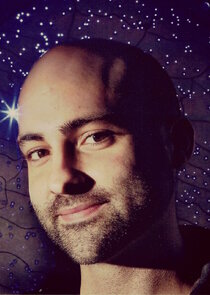
Paul M. Sutter
as Astrophysicist

Erik Todd Dellums
as Narrator

Mike Rowe
as Narrator

Richard Lintern
as Narrator

Phil Plait
as Astronomer

Kevin Walsh
as Astronomer

Michelle Thaller
as Astronomer, NASA Goddard Space Flight Center

Nina Lanza
as Planetary Scientist

Dr. Moogega Cooper
as Planetary Protection Engineer

Dan Durda
as Astrophysicist / Planetary Scientist, Southwest Research Institute